As seen in CoStar
Construction wave is largely stunting rent growth across region
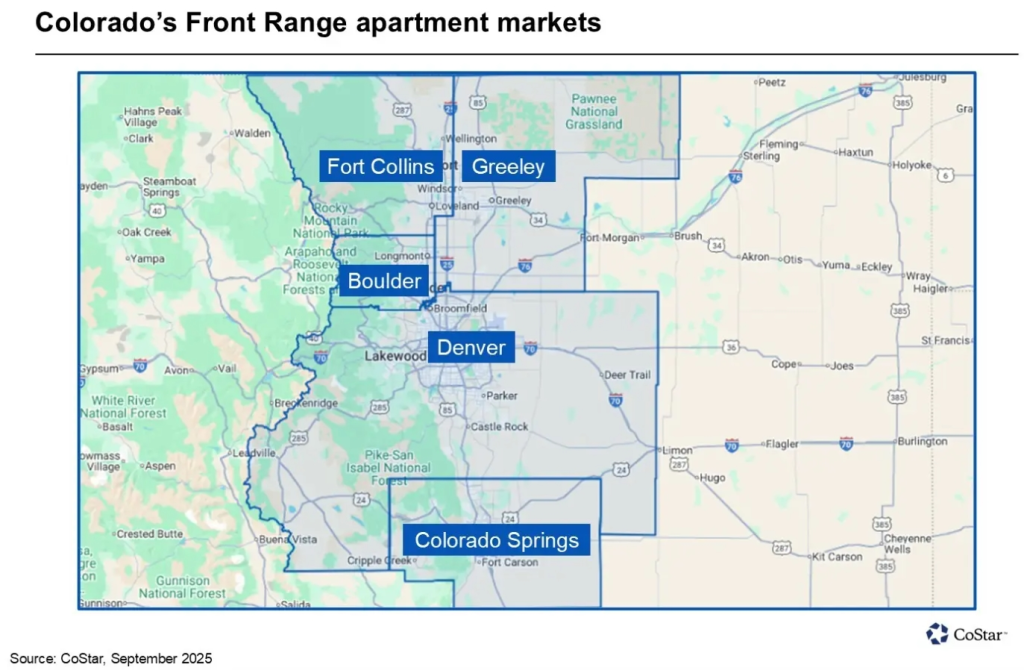
An unprecedented wave of multifamily construction has led to rising vacancies and slower rent growth across Colorado’s Front Range region over the past few years.
As the construction pipeline slowly declines, apartment rents could regain momentum, with some markets set to outperform.
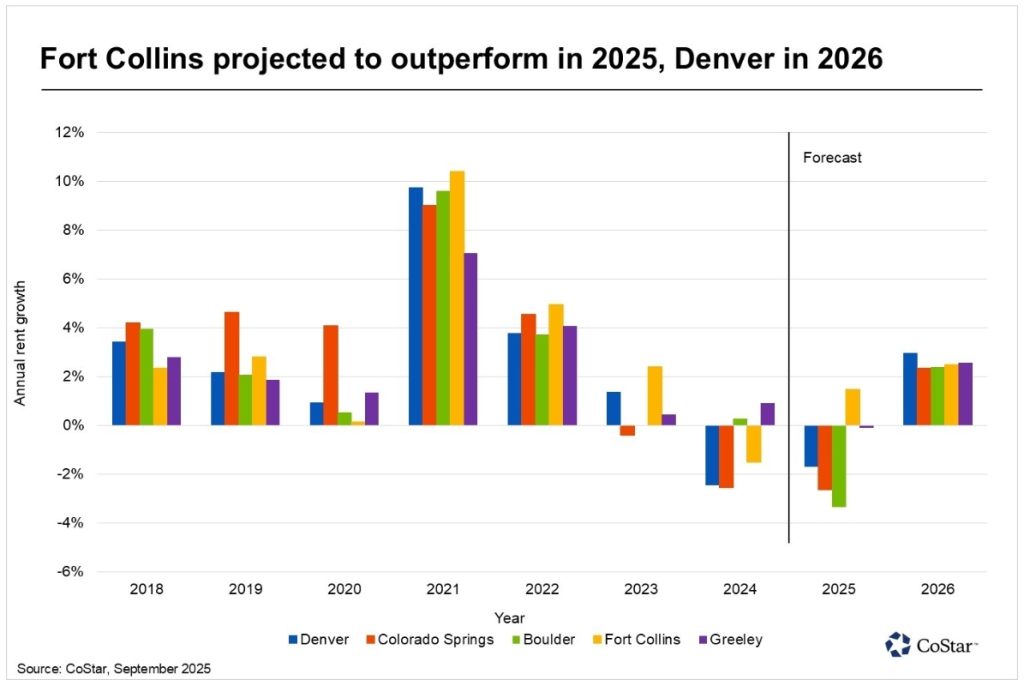
Fort Collins is the only market across the Front Range projected to end 2025 with positive rent growth. At 7.4%, the Fort Collins apartment market holds the lowest vacancy rate across the Front Range, and landlords are responding to the tightening market conditions by pushing rents higher. Rents are projected to increase by 1.5% in 2025, CoStar projects.
Relative to most other areas across the Front Range, industry professionals noted that it is incredibly difficult to build in Fort Collins, which has helped insulate the market from becoming overbuilt. The high cost of city entitlements and broader economic challenges have made many potential projects economically unfeasible.
A similar dynamic has kept apartment vacancies lower in Greeley, and asking rents are projected to remain flat this year.
On the other end of the spectrum, Boulder apartment rents are projected to contract by 3.3% this year, marking the steepest decline in the region.
Boulder is the state’s most expensive housing market. Demand has pulled back in the past year as renters have left in search of lower rents and better concessions in surrounding areas. At the same time, a wave of new units pushed vacancy to a record 10.8%.
Rents have also contracted sharply in Colorado Springs. The cost to build on a per-door basis is generally lower in Colorado Springs than in other Front Range markets, partly due to lower taxes and fewer regulations.
While interest rates and construction costs remain elevated, developers have become increasingly attracted to this area of Colorado, where new developments are more likely to pencil.
Roughly 12,500 units have been added to Colorado Springs since the supply wave began in early 2022, causing the vacancy rate to nearly double to 12.6%. The percentage of apartments offering concessions hit an all-time high, and asking rates have contracted as landlords vie for renters in a competitive market.
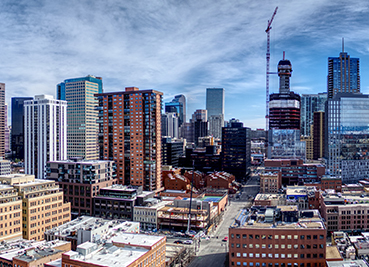
In an encouraging sign for local landlords and property managers, apartment demand in the Denver area pulled ahead of new construction for the first time in three years. While rents are projected to contract in 2025 by 1.6%, this marks an improvement from the prior year when rents fell by 2.4%.
Landlords are hopeful that 2026 will mark a return to historical norms. Fewer completions are setting the stage for a more supply-constrained market, which should support stronger rent gains and allow landlords to pare back concessions.
Rents will increase between 2.5% to 3% in 2026 across Colorado’s Front Range markets, marking a return to the pre-pandemic, five-year average, CoStar projects.