As seen in Colorado Real Estate Journal
Nearly every capital conversation we have starts in the same place: We believe in Denver long term, but it is difficult to convince our investment committee to make a sizeable bet today. Two quarters ago we argued the market had reset and that disciplined capital would be rewarded for looking past the noise. Third-quarter data continue to support that view. The opportunity to be a buyer of Colorado multifamily in today’s market conditions presents a compelling combination of basis and strong relative stabilized yield. To state the obvious, the recent rise in the all-in cost of debt has added further noise to a market that has certainly faced challenges but continues to trend toward positive trajectory from a pure market fundamentals perspective.
Why Colorado today? Across the Front Range, 51.8% of adults hold a bachelor’s degree or higher and 10-year job growth of 13.2% runs about 1.7x the national rate, spread across a diversified employment base rather than a single sector: professional and technical services, health care, a $90 billion-plus technology industry representing about 20% of state gross domestic product, and the nation’s second-largest state aerospace economy with more than 500 companies and more than 55,000 direct jobs. Highly educated, high-earning individuals and a substantial continued rent vs. own gap will continue to fuel absorption and firm up market fundamentals across the Front Range.
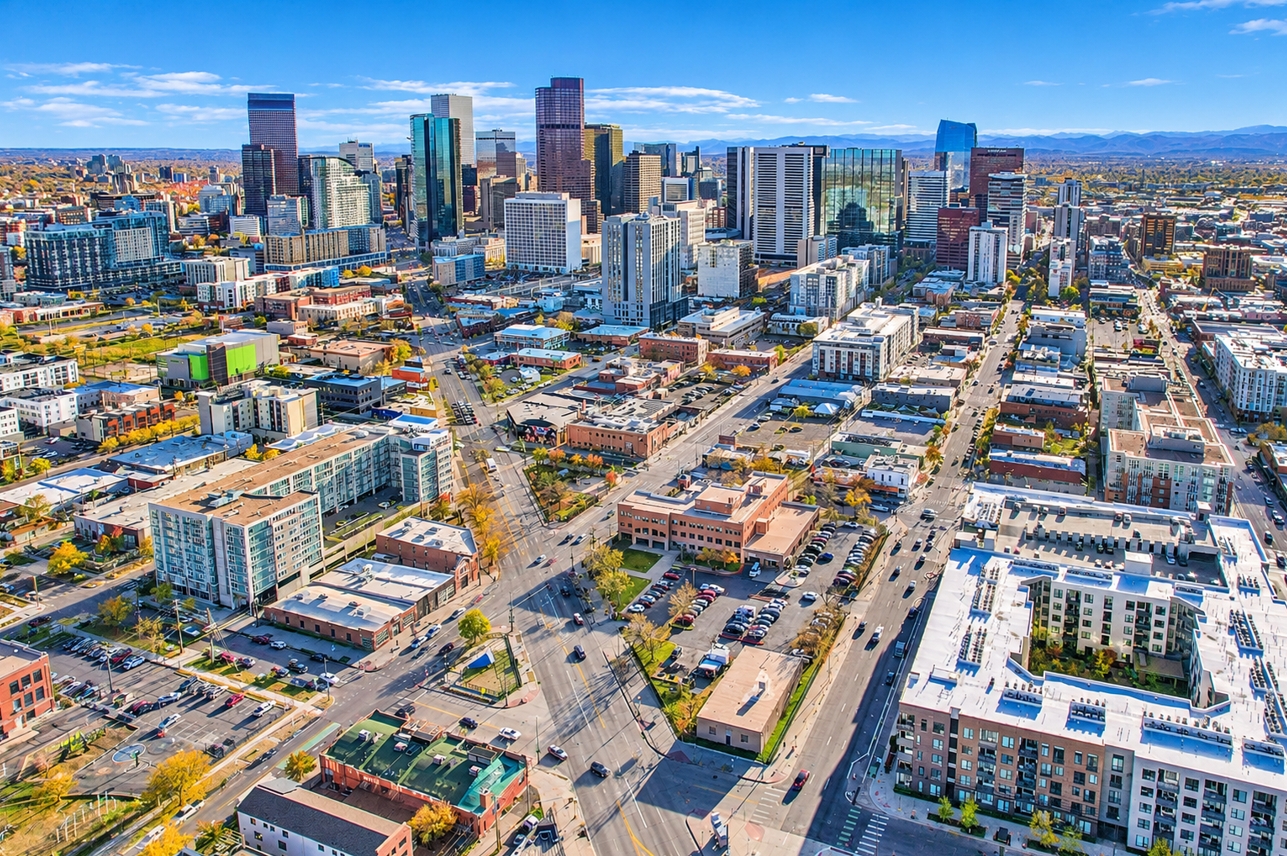
Public and private investment within Denver’s core. A healthy combination of both public and private investment continues to support the long-term demand story more localized to Denver. Burnham Yard, the Denver Broncos’ planned $4 billion plus privately financed stadium district, targets 2031. Santa Fe Yards adds a $300 million-plus stadium for the NWSL’s Denver Summit FC by 2028. The National Western Center expansion was approved at $812 million, and River Mile will reshape 62 acres along the South Platte with 15 million square feet of mixed-use development. Downtown, a $570 million tax-increment fund runs through 2038, and CU Denver’s purchase of Independence Plaza should bring 3,000 to 5,000 students and faculty into the urban core. Continued investment within Denver’s core will prime the pump for continued strong absorption as new multifamily development in the CBD remains challenged.
Renting for longer continues. Denver’s median single-family home price of $668,300 ranks 23rd among the 237 largest U.S. metro areas and sits around 54% above the national median, up from just about 13% above in 2005. At a 6.5% or so 30-year mortgage rate, owning nationally costs about 40% more than renting against a long-term average of about 30%; within the Denver MSA, the premium to own versus rent is about 2.62x on average. This widening gap keeps would-be buyers renting longer, supporting strong absorption and continuing to rebalance the supply-demand equation.
Third-quarter data shows a positive trajectory with continued supply dropoff backdrop. Denver’s metropolitan statistical area gross rent rose $13 (0.7%) quarter over quarter to $1,813 per unit, or $2.08 per sf. Year-over-year gross rent growth improved from -3% in the second quarter to -1.5% in the third quarter, and net rent growth (gross rent less concessions) from -8% to -6.2%, which reflects the third consecutive quarter of less-negative annual rent growth.
Trailing 12-month absorption of 13,061 units sits around 3.7% above the same period a year ago. Conventional vacancy, which includes lease-up product, fell 67 basis points quarter over quarter to 8.8%, the lowest level since the third quarter of 2023. The development pipeline (under construction plus planning) has contracted around 47% from its 120,000-unit peak in fourth-quarter 2022 to around 64,000 units as of the second quarter (Apartment Insights). Strong absorption figures, coupled with a contracting supply pipeline, will continue to promote the “less negative” momentum, which will eventually lead to true positive fundamental growth.
Current transaction landscape. Multifamily transaction volume across Colorado remains extremely muted as we head into the fourth quarter. Today, the Denver metro area is still shy of $1 billion of closed multifamily sales volume year to date, on pace for the lowest trade volume since 2010. In the first half of the year, deals were difficult, primarily due to struggling property operations and the scrutinized underwriting environment we saw from active buyers. The sentiment from capital is not redlining Denver or Colorado but taking a much more calculated approach where haves and have-nots are much more pronounced. As fundamentals continued to thaw, we expected transaction activity to pick up in the third and fourth quarter, prior to the rapid increase in Treasury yields (10-year U.S. Treasury: July 1 about 4.5% vs. about 5% on Oct. 22). The elevated rate environment has added headwinds to getting deals done today. One theme to continue to monitor is that with higher rates altering refinance proceeds relative to 30-45 days ago, seller capitulation may help close some of the bid-ask spread we saw in the first half of the year.
Overall, the Denver multifamily market continues to chop through absorbing new inventory, and we are slowly starting to see a rebalance of the supply-demand equation with vacancies tightening and a continued “less negative” trend. As we continue to digest how the market is perceiving the elevated rate environment, we will continue to arm you with data and transparency.